


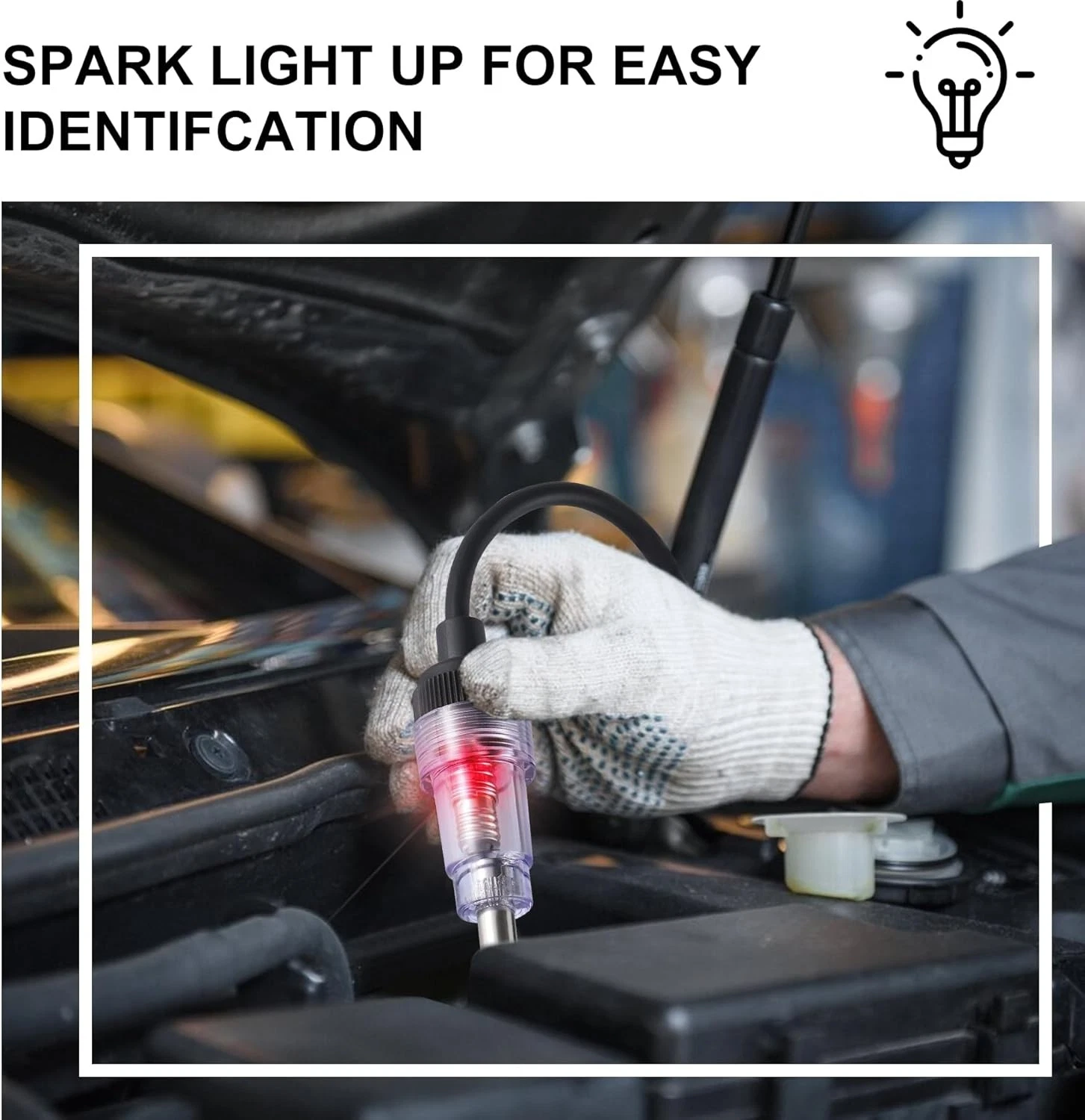
Quickly detects weak or missing ignition spark
Inline visual tester shows spark intensity clearly
Works with most petrol engines – cars, bikes, ATVs, small engines
Quick plug-and-play connection for fast troubleshooting
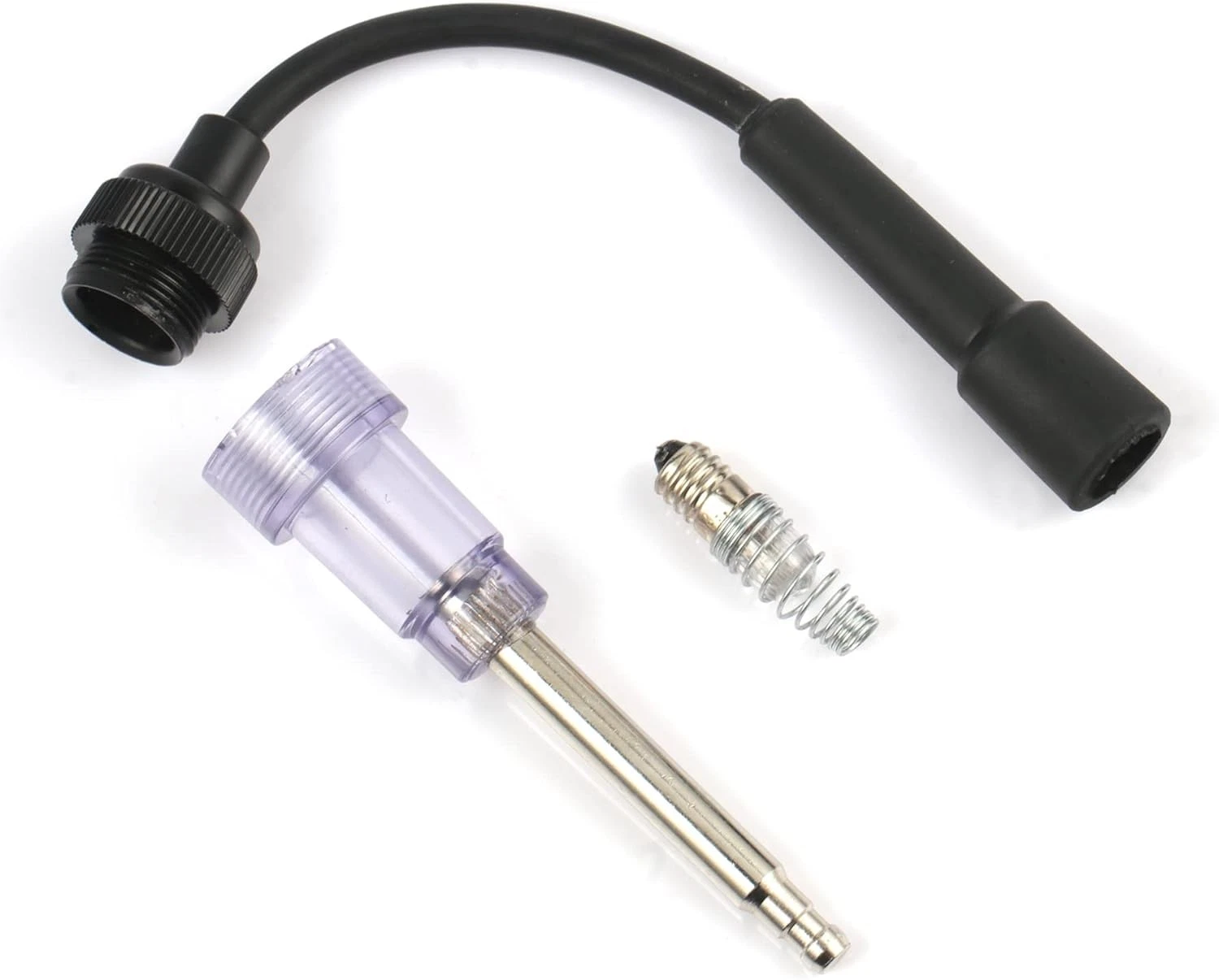
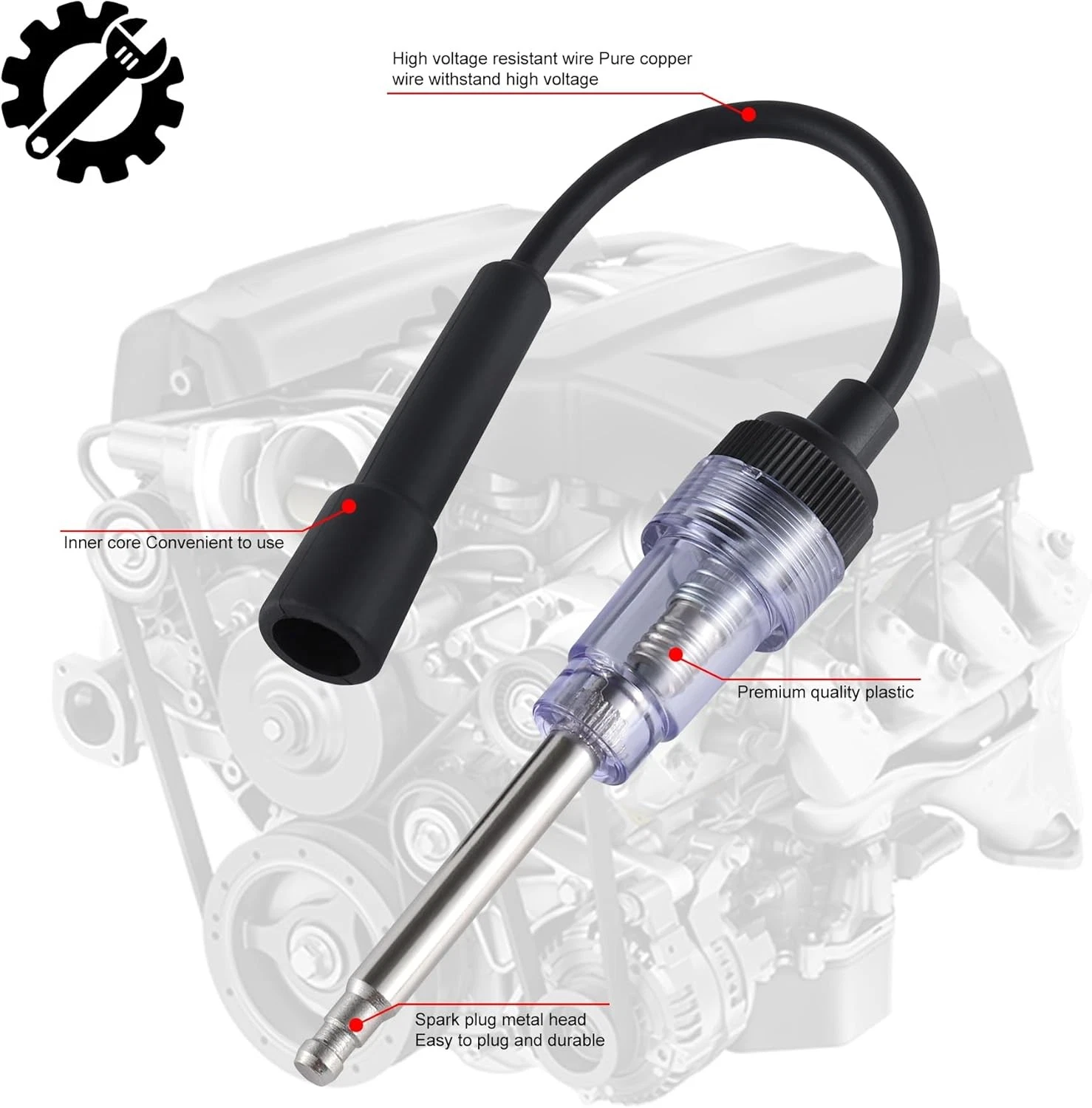
An Inline Ignition Spark Tester is a specialized diagnostic tool used to verify that an ignition system is delivering high-voltage current to the spark plugs. Unlike traditional methods that involve grounding a pulled spark plug, an inline tester is connected in series between the spark plug and the ignition lead (or coil), providing a safe, visual confirmation of spark health while the engine is cranking or running.
Visual Check of Spark Presence: Features a transparent housing or a viewing window with an internal neon bulb or flash tube that illuminates whenever an electrical pulse passes through it.
Intensity Interpretation: The color and brightness of the light provide a qualitative assessment of spark health:
Bright Blue/White: Strong, healthy spark capable of detonating fuel.
Dim Yellow/Orange: Weak spark, often indicating a failing coil, bad wiring, or poor battery voltage.
No Light: No current is reaching the plug, signaling a failure in the coil, PCM, or wiring harness.
Misfire Localization: By testing each cylinder individually, you can pinpoint exactly which coil or wire is failing—especially helpful for resolving P0300–P030X error codes.
| Feature | Details |
| Material | Chrome Plated Lead & Heavy Duty Plastic Housing |
| Length | Approx. 12.5 cm (Probe length) |
| Cable Length | 15 cm |
| Compatibility | 12V Ignition Systems (Small & Large engines) |
| Bulb Type | High-intensity Neon |
How to Use (Step-by-Step)
Preparation: Ensure the engine is off. For safety, some recommend briefly disconnecting the negative battery terminal while making connections.
Disconnect: Pull the ignition wire (HT lead) or the coil pack off the spark plug.
Install Tester: Plug one end of the tester into the spark plug and the other end into the ignition wire or coil boot. It should now be "inline" with the circuit.
Crank/Start: Start the engine (or have an assistant crank it). Caution: Keep hands away from the wires during operation to avoid high-voltage shock.
Observe: Watch the viewing window. A rhythmic flashing light indicates that the ignition system is firing.